

Pre Lambing - Prevention Is Better Than Cure
27/01/26
Liquid feeds can be utilised for sheep for pre-tupping as well as pre- and post-lambing. Pre-tupping, liquid feeds can help with flushing ewes by improving their nutritional status and body condition score to help improve ovulation rates and lambing percentage.
For pre- and post-lambing, 70% of the lamb’s growth takes place in the last two months of pregnancy. It is therefore vital to ensure that the ewe’s nutritional requirements are met during this time, if these nutritional demands are not met then metabolic disorders such as “twin lamb” disease can occur. Post-lambing liquid feeds can support good quality milk production from the ewe.
This useful guide will give an overview of the nutritional and practical aspects of sheep liquid feeds.
Which product?
- Prime 20: Mineralised high protein liquid feed often used on lowland units to partially offset other protein sources. Best fed via wheel licks. Can also be fed to cattle.
- Sheepmol: A higher energy liquid feed at 13.5 ME, low in protein. Ideal for feeding to ewes to combat twin lamb disease, or for ewes either in poor condition/ poor weather
conditions. The product to feed if a lambing percentage of 190%
plus is expected. Contains glycerine, a high energy additive ideal for getting fast acting energy into ewes quickly and effectively. Flows at low temperatures. Sheepmol Plus available with added vitamins and minerals.
- Stockmol 20/ MOLMAX: A good general-purpose product, energy at 12 ME. Ideal for feeding to ewes both as a liquid feed and for adding to a TMR mix to dedust and drive intakes. To maximise sugar intakes, this should be offered as a liquid feed for ewes carrying twins and triplets, as wellas part of the TMR feed. Can be fed to cattle as well.
- Pot Black: Most commonly used on upland units where a lower lambing percentage is expected, ideal for complimenting a high forage-based diet. Flows well in low temperatures. Best fed via wheel licks.
Can be used on lowland units to partially offset other protein sources.
- Regumix: Used on lowland units to partially offset other protein sources. Higher protein blend offered for sheep. Best fed via wheel licks.
Key Selling Points
- High energy blends can help reduce the risk of “Twin Lamb” Disease e.g. Sheepmol
- Low substitution rate allows feed intakes to be maintained and better use of dry feed
- Balances variations in grass/forage quantity and quality
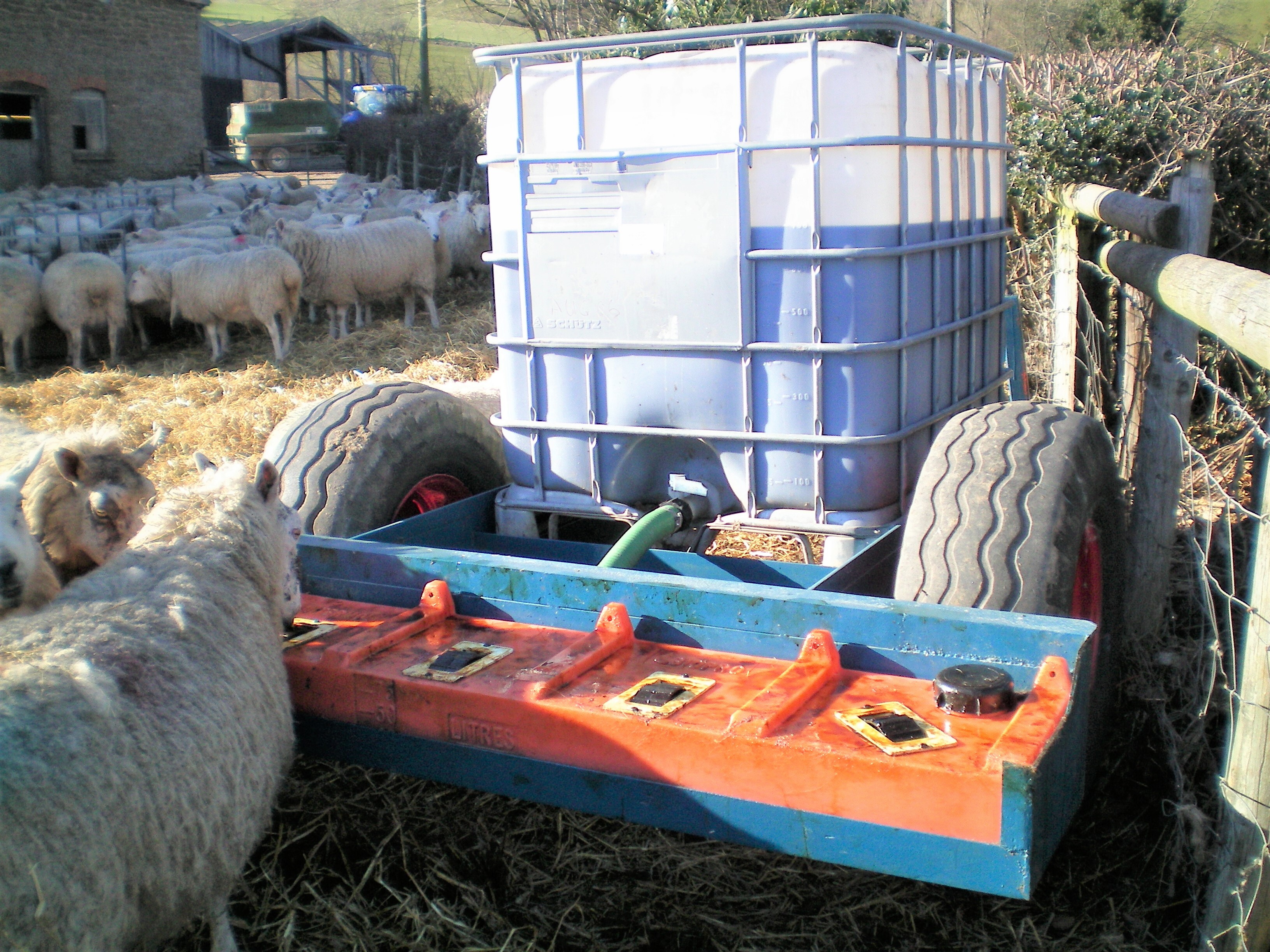
- Lick feeders offer a simple and easy feeding system
- Ad-lib feeding reduces stress for sheep
General Noats
- Always feed liquid feeds away from a water supply, to avoid ewes getting bored and feeding from the
molasses/water - Provided the overall ration is balanced ewes will consume on average 200-300 grams (0.5 litres) /day liquid feed
- If there is a shortfall of nutrients in the diet, molasses consumption may be above the recommended level
- Some flocks that are grass based entirely, use the molasses consumption as a barometer of when the
ewes need moving to the next field - Liquid feeds can be fed after lambing as well to optimise good quality milk production
- Liquid feeds are a supplemental feed and should always be fed as part of a balanced diet
- Constant monitoring of ewe condition is essential